by Jackonicko » Tue 03.03.2009, 03:13
She looks Cat A, in which case you won't be allowed to buy for salvage, surely?
As I understand it, and someone more knowledgeable will doubtless put me right, there are four main categories of write off:
Category A - Entire Vehicle must be crushed.
Category B - Vehicle may not be returned to road. Undamaged parts may be sold.
Category C - Repairable. Possibly structural damage. Cost of damage (at main dealer prices and labour rates) is more than book value of vehicle.
Category D - Repairable. Probably non-structural damage. May have been economic to repair, but insurer doesn't want to.
(Category F - Damaged by fire.
Category X - Repairable. Minor Damage.)
Category A - May not be resold. Entire vehicle must be crushed. Total burnout or flood damage (salt or foul water). Severely damaged with no serviceable parts, or already stripped out shell. DVLA require "Notification of Destruction". If your car was Cat A, you're absolutely f***ed as it must be crushed. All of it.
Category B - Vehicle itself may not be resold. Damaged beyond economical repair, usually with severe structural damage. DVLA require "Notification of Destruction". Parts can be removed and sold. The damage will have compromised the car's structural integrity.
A Category C write off is officially categorised as Repairable salvage, where the cost of repairs exceeds book value. The car can be sold complete to the Trade or Public. Recorded as "Category C" at DVLA. Category C vehicles' V5 documents are returned to DVLA. You re-apply, to DVLA or at your local VRO, for registration on the original identity once you have fixed it up, MOTed it and want to Tax it. Re-registration removes the Category C classification, but evidence it was at one time Category C remains on the vehicle's record at DVLA (and HPI and AA and the others). Cars must now have a VIC inspection before returning to the road. This costs £35 and will involve comparing the vehicle presented against information held by DVLA, such as the vehicle identification number, make, model, colour and engine number. The VIC will also compare the record of previous accident damage with evidence of damage repair as well as checking other components to confirm the age and identity of the vehicle. It does not guarantee the roadworthiness of the vehicle, so does not guarantee that the car is straight, for example.
Category D is officially also Repairable salvage. It may have had minimal damage, probably not structural, but the insurer has elected not to repair the vehicle, even though it might be economic to do so, and has instead sold it (perhaps back to the owner) as salvage. Cat D cars are often stolen and recovered after the claim has been paid. Or they may be unusual models or grey imports where the difficulty of obtaining new parts hinders a quick repair. A Cat D car does not need the VIC inspection to return it to the road, but will be recorded as such with HPI, AA, etc.
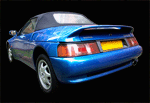
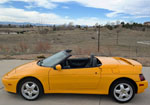
Any minor damage to the front clam of an Elan is likely to result in Cat C or D categorisation, as this is beyond economic repair at main dealer rates, or close to it. The car can, however, be made as good as new with a donor clam, or with a good fibre glass repair, or at 'mate's rates'.


 ) for the new car, let me know.







 don´t worry... glad to see you are ok after this accident and send a kiss to your guardian angel which has so much elan to rescue you...