Giniw wrote:As for the brakes maybe they just need to be refurbished and a proper pads set? Our brakes have the reputation of being very poor but it's mostly because they were not properly maintained (seized, poor bleeding which is rather tedious at the rear, until you read it's better to unbolt them to tilt them to help the bubbles go out ^^). I am happy with stock brakes and my ebc yellow stuff at four corners. Some say that even after they are refurbished they need a constant attention to remain usable. I refurbished mines a couples of years ago and did nothing since so ...
Anyway, the stock brakes can probably be swapped for something better, and indeed a lot of people change them, but they are not that bad actually.

Where did that come from? What's the point of that when the bleed nipple is already at the highest point of the caliper where the air will collect? That seems to me like a lot of work for no advantage.
I've never had a problem bleeding brakes but I do it
'wrong' according to some Lotus Manuals ...

-
My elder sister's first car, a 1958 Ford 100E Anglia, came with a Ford Handbook and a Castrol Girling booklet that explained all about various engine, gearbox and diff oils, all made by Castrol of course, and a section on brake fluid and maintaining Girling brakes - drum brakes and slave cylinders in that era. For bleeding it said 'The efficacious method for bleeding brakes is to bleed the shortest run first (OSF), then next shortest (NSF) etc. Air in those circuits interferes with the efficacy of the master cylinder forcing fluid into the longer rear circuits and associated slave cylinders".
Made sense to me, after I'd looked up 'efficacious' in the dictionary
, so that's how we did my sister's car and how I've always done it since. Still works on dual circuit systems though you could probably do OSF, NSR, NSF OSR without a problem... but my habit is still Girling's OSF, NSF, OSR, NSR.
I bought a Lotus Seven Owners Manual when I was running a Lotus 6 in the late 60's and saw Lotus said start bleeding at the rear. I reckon that's 'bleeding stupid' and they repeated that in the Elan+2 Manual. In the Eclat Manual it was 'bleed as usual'...
With M100 it's definitely best to bleed OSF and NSF and then deal with the rears that have the BPV's etc as an added complexity. Early cars had 3/15 Brake Proportioning Valves
and a Pressure Limiting Valves mounted above the BPV's that also had bleed nipples. PLV was then replaced with 70/1 Proportioning Valves in the same location that also had a bleed nipple. (Wonder what's on IB10...

). Then things were simplified by just a 2/15 BPV in each circuit so no extra bleed nipples, just the rear calipers' nipples. If the extra bleed nipple is there use that to bleed the long pipe to the rear before doing the rear calipers. Open a rear caliper bleed nipple
wide with suitable pipe* and fluid catching pot in place. ( * I use windscreen washer tube with a 20p aquarium one valve valve shoved in the end and held with a cable tie so I don't need any assistance.) Then a slow deep thrust all the way down (Yeah baby!

) on the brake pedal is needed so fluid flows through the BPV without operating the shut off valve and into and out of the caliper. Stamping on the pedal is NOT the method. Up quickly with the brake pedal and repeat the slow thrust, up again. It's then time to check the mastercylinder fluid level and see if there's any air in the transparent tube. If there is air, seldom is, then 2 more slow strokes will usually clear it. Close the bleed nipple and do the other side in the same way. Simples. Don't know what all the fuss and pressurised Eezibleed kits is all about ..

and as for unbolting calipers ...


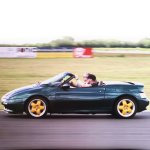
 The car feels really tight and was a pleasure to drive. I stopped for petrol on the a303 in Ash and can highly recommend the Fish & Chips - freshly made, lovely

 I'll be using it as a weekend/summer car. As you say, a car like this needs to be driven. So I intend to potter around in it locally a few weekends a month (at least) and to visit the family 50 miles away (when I dont need more than two seats). I'll take it for longer runs a few times a year when we go on holiday in the UK. I'll also hopefully get to a few shows and meet some of you guys (wife not into that sort of thing
  ). It will be garaged and I'm obsessed with servicing and maintenance so it won't want for anything. I plan to keep it for a long time. I have a plan for very subtle improvements too, UV light underneath, lovely flames down the side and a 10k sound system

 SWMBO might decide she enjoys it and then you'll never get the keys back




 I also always prefill an oil filter on the bench before fitting it. Filled a new filter to the top this afternoon and just been out to put quite a bit more oil in it - amazing how it soaks it up. Just before fitting I'll tip it horizontal over a jug to save what would run out when fitting making a mess but what comes out is nowhere near what I've put in it. Once fitted, start up and oil pressure is there immediately, none of that agonizing wait for the filter to fill up before oil pressure starts to rise.